Aesthetics
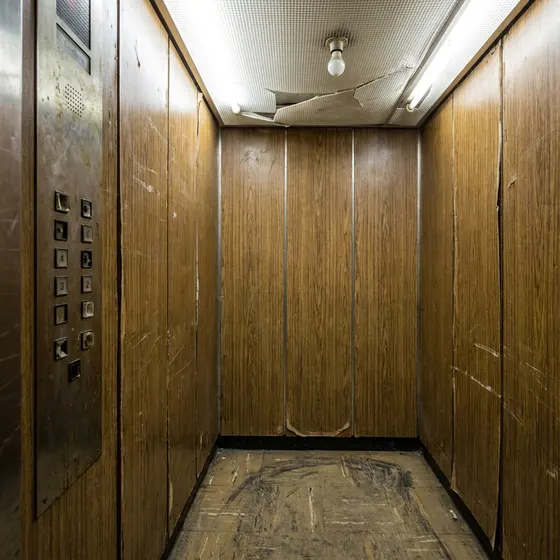
Outdated cab interiors knock first impressions in residential lobbies, hotels and commercial receptions.

Lift modernisation refurbishes an existing lift to current standards — typically 40-60% of full replacement cost, with 2-6 weeks of downtime versus 8-16 for a full replacement. BASE modernises platform and passenger lifts across the UK, including Equality Act 2010 accessibility upgrades and BS EN 81-80 compliance closure on existing lifts.
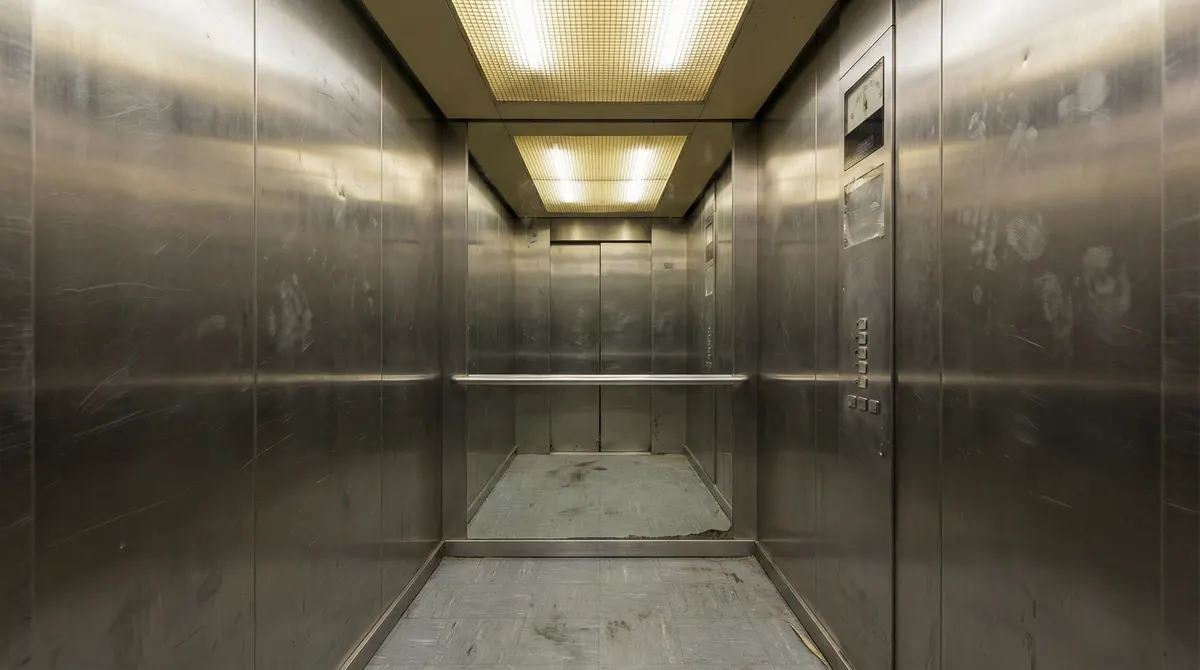 Before
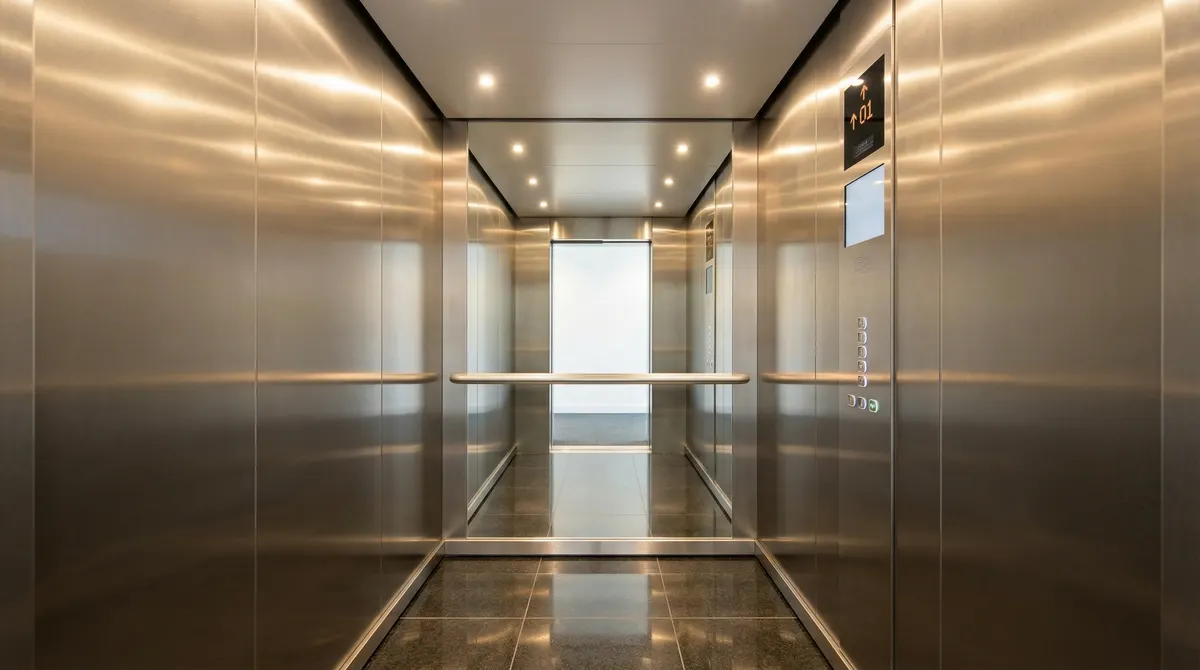 After
After
Same lift, before BASE / after BASE.
A modernisation enquiry usually starts with one of these five symptoms — aesthetics, breakdowns, compliance, running costs, or obsolete OEM parts. The right scope falls out of the feasibility survey; the right answer might be modernisation, or it might be replacement.
Outdated cab interiors knock first impressions in residential lobbies, hotels and commercial receptions.
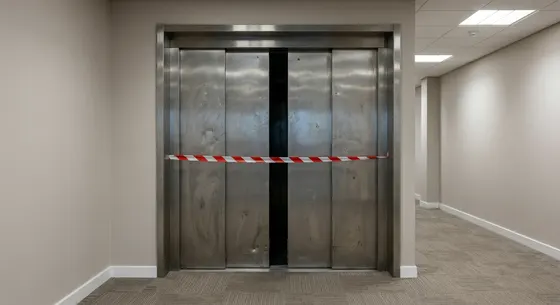
Old drives and controls cause frequent downtime, emergency callouts and tenant complaints.
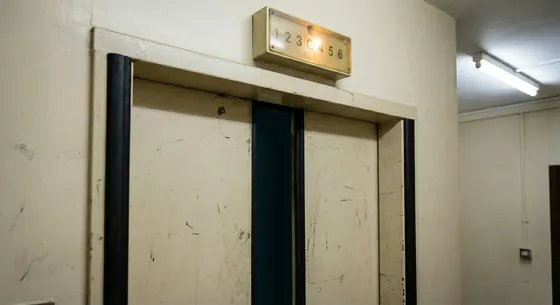
Pre-2017 lifts fail current BS EN 81-70 accessibility and Equality Act 2010 standards.
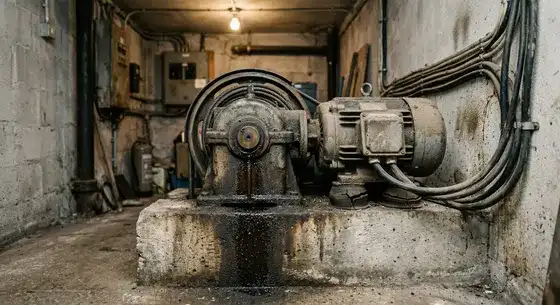
Spiralling parts costs and energy bills on older hydraulic drives and inefficient lighting.
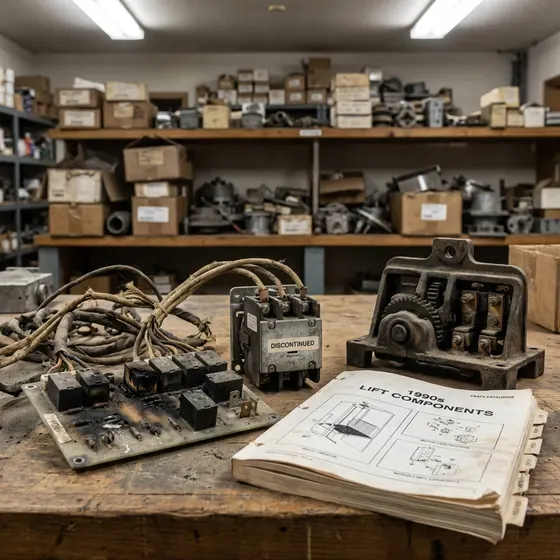
Discontinued OEM components force expensive workarounds and unscheduled downtime.
Modernisation is rarely a single line item. The most common packages combine controls and drive on a tired traction lift, or doors and cab interior on a residential block where the visible upgrade matters as much as the engineering.
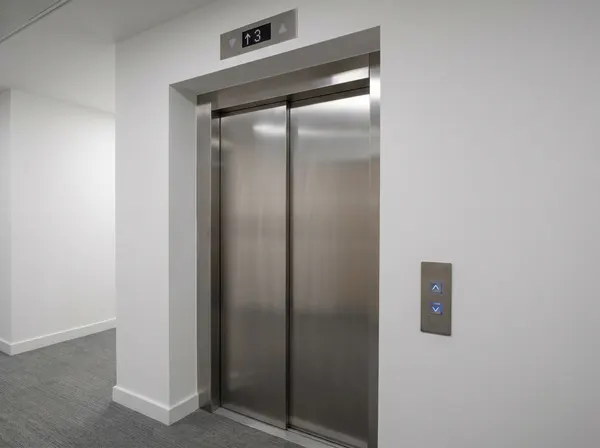
Door operators, photocell light curtains, restrictors and landing-door interlocks brought to current EN 81 baselines. The single largest source of breakdown calls — refresh here pays back fastest.
Compliance detail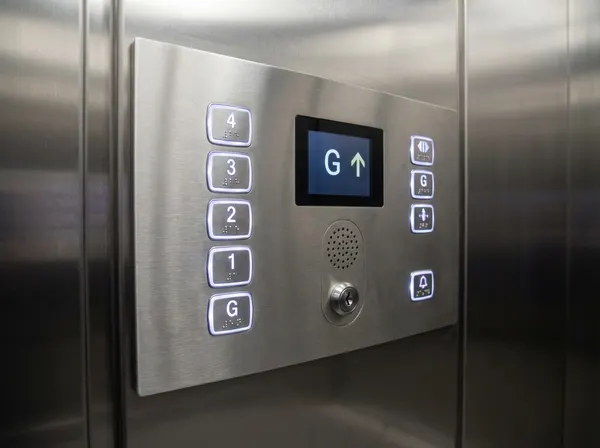
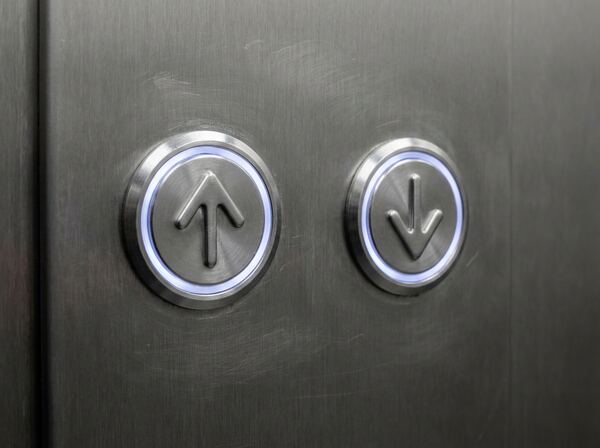
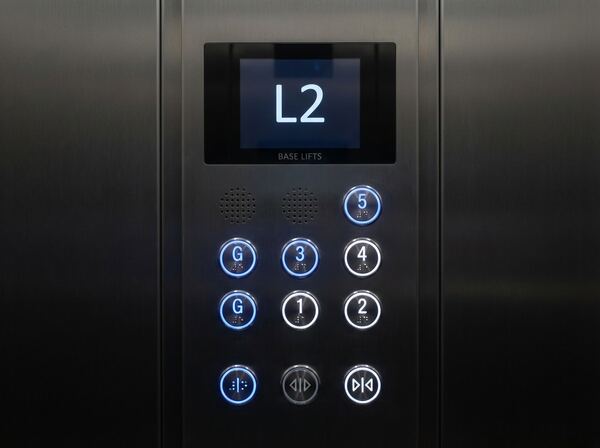
Car operating panels, landing buttons, position indicators and audible signalling brought to BS EN 81-70 tactile, Braille and contrast specification. Mounted at 900-1100 mm reach.
Accessibility sector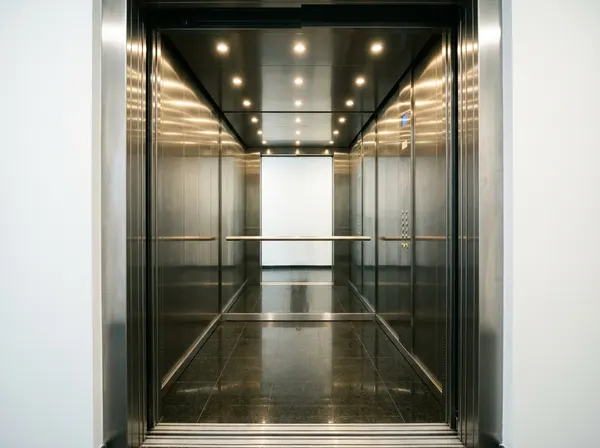
Floor, wall panels, ceiling, mirror, handrails, ventilation. The visible upgrade tenants and residents notice — typically packaged with control or drive works rather than as a standalone job.
See finish themes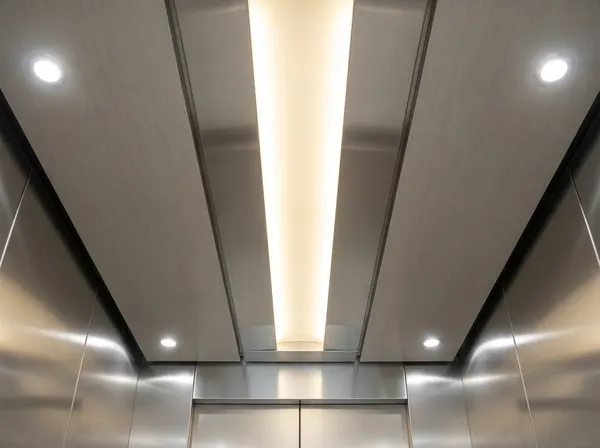
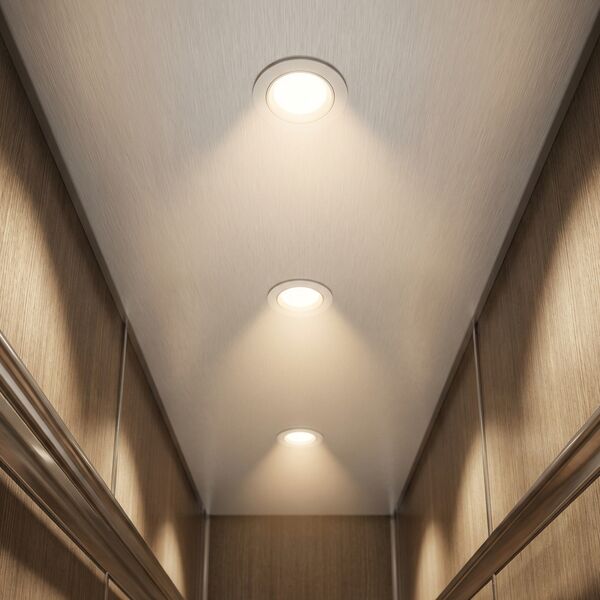
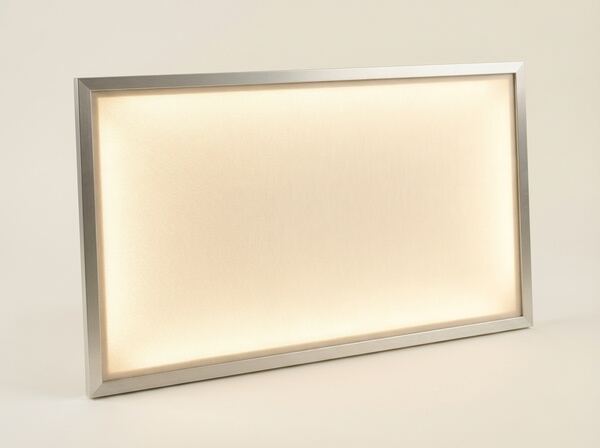
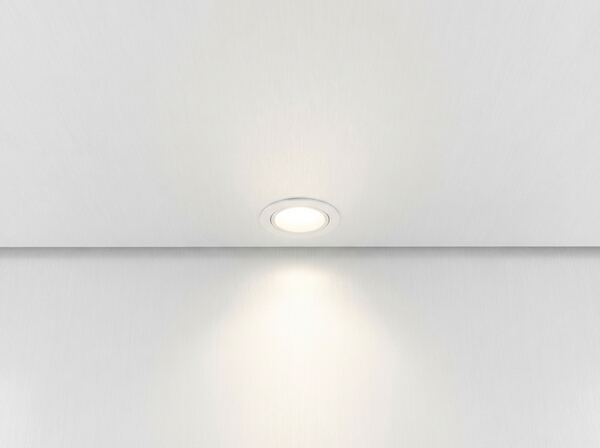
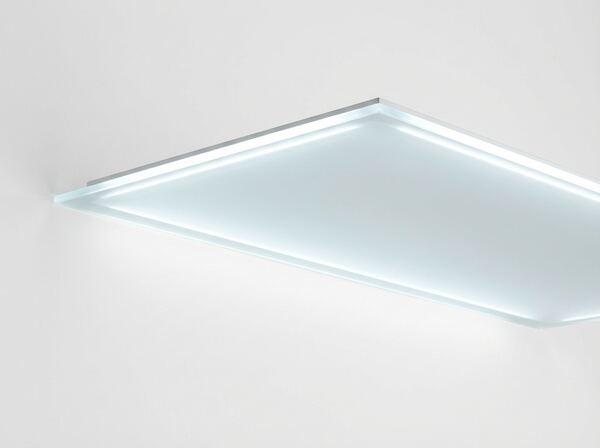
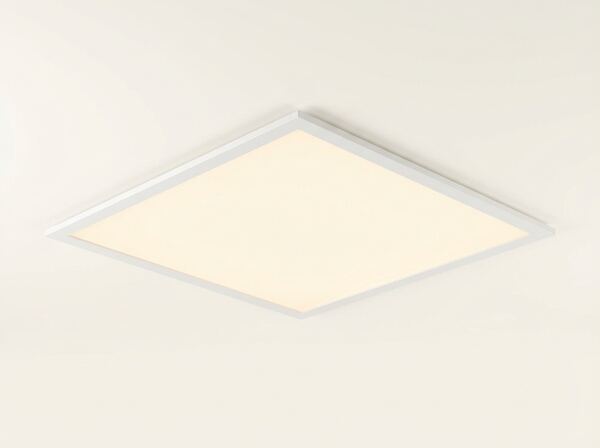
LED car lighting, edge-lit ceiling panels, downlights and shaft lighting. Cuts energy consumption 60-80% versus original fluorescent fixtures and supports ESG reporting where the building has it.
See lighting swatches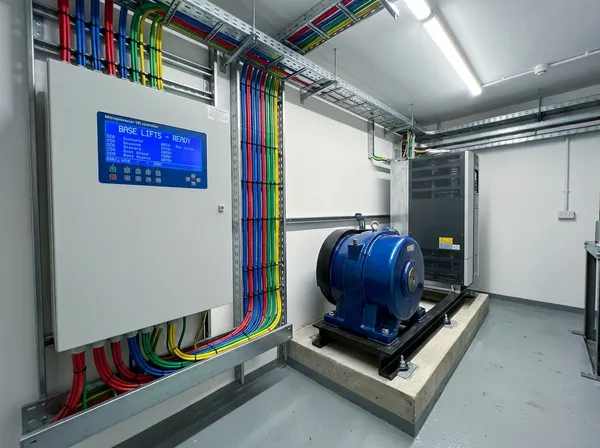
Worn hydraulic power packs swapped, controllers replaced with modern PLC carrying remote diagnostics, VVVF retrofits on AC motors. Often the single highest-value upgrade on a tired lift.
Or replace the lift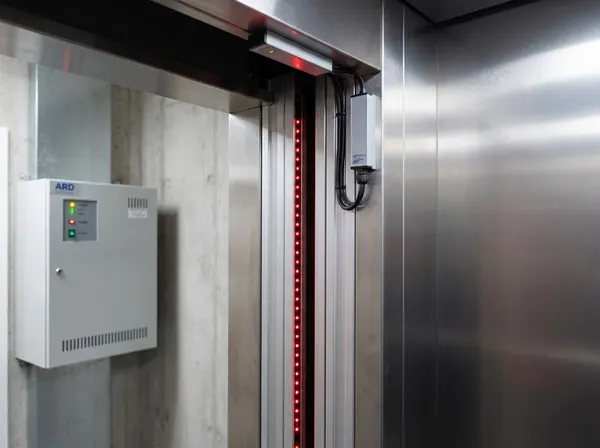
Overspeed governors, safety gear, brake assemblies, emergency lighting, autodialler and battery backup brought to BS EN 81-80 SNEL standard. Closes LOLER findings and resets the thorough examination clock.
LOLER inspectionsBold Contrast, Boutique Bronze, Contemporary, Warm Heritage. Each theme is a complete cab specification — walls, ceiling, floor and detail — tuned to a building type. Hover or tap a card to see the ceiling, floor and wall detail behind each hero shot.
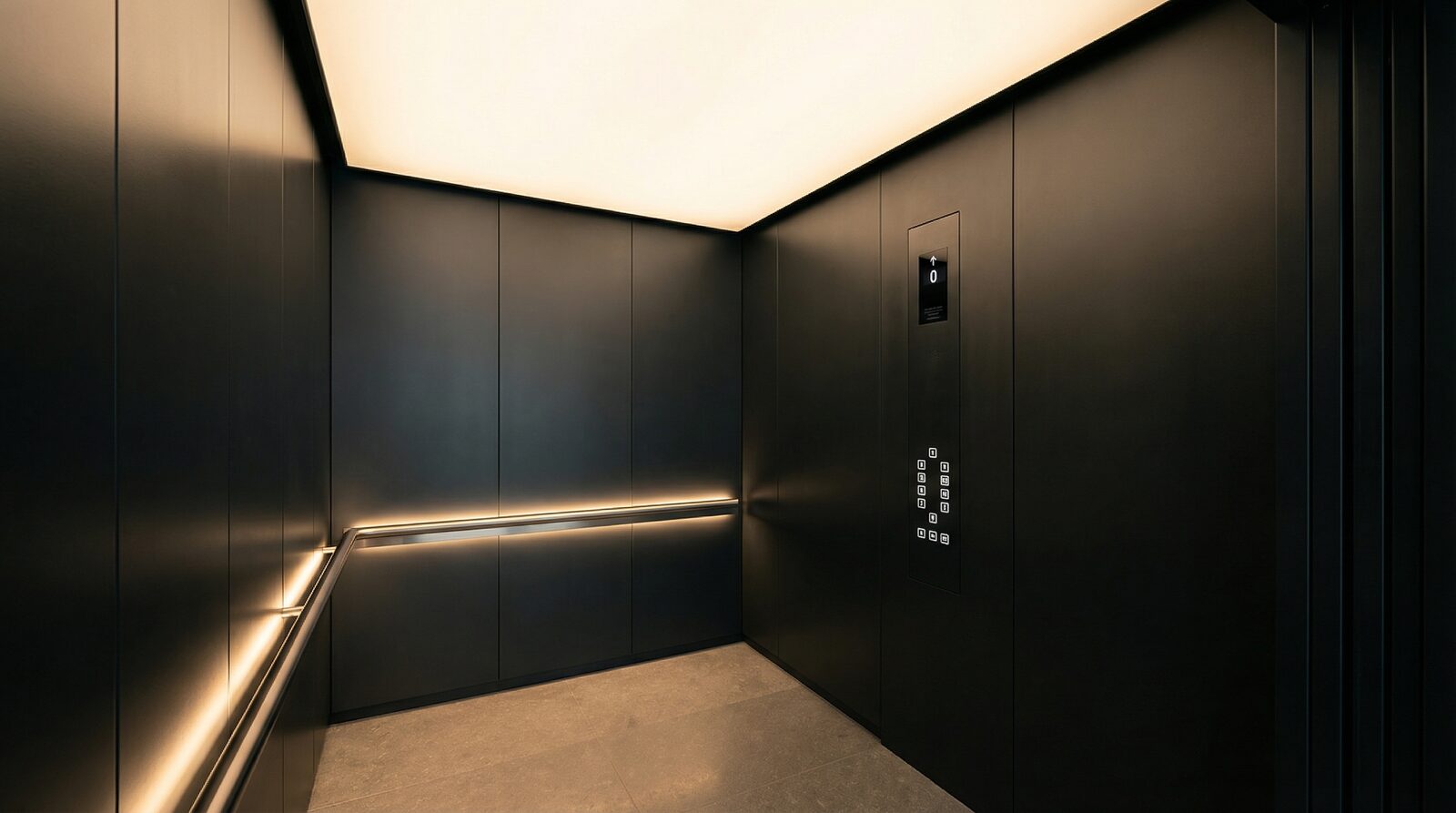 Bold Contrast
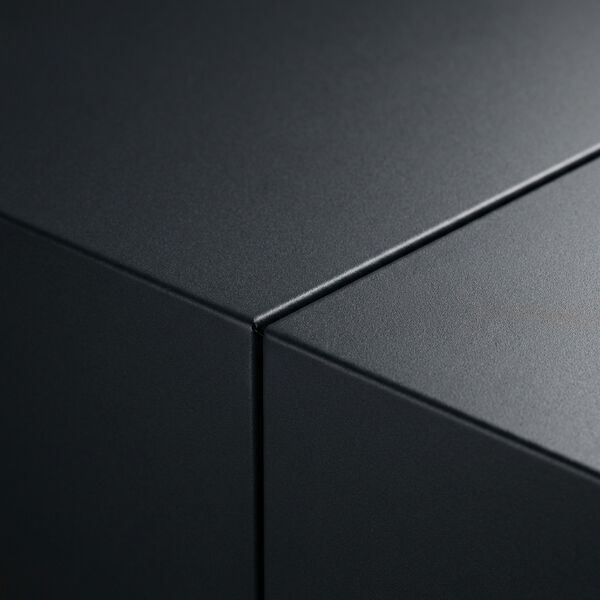
 High-contrast finishes for commercial and hospitality lobbies. Stainless against dark panel, accent lighting, mirrored back.
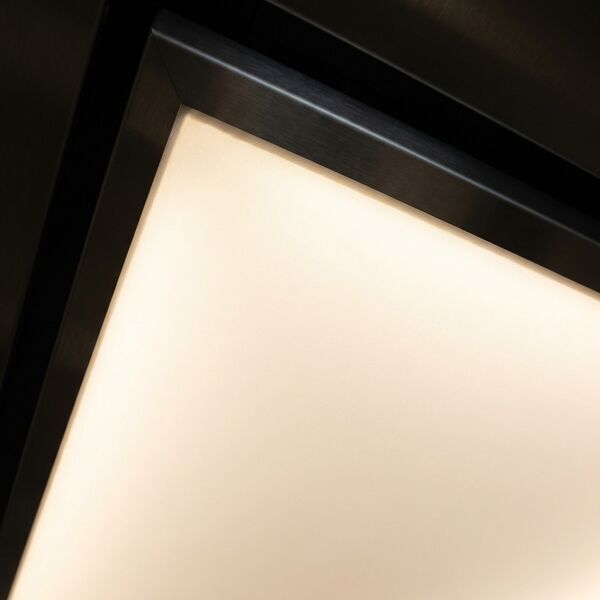
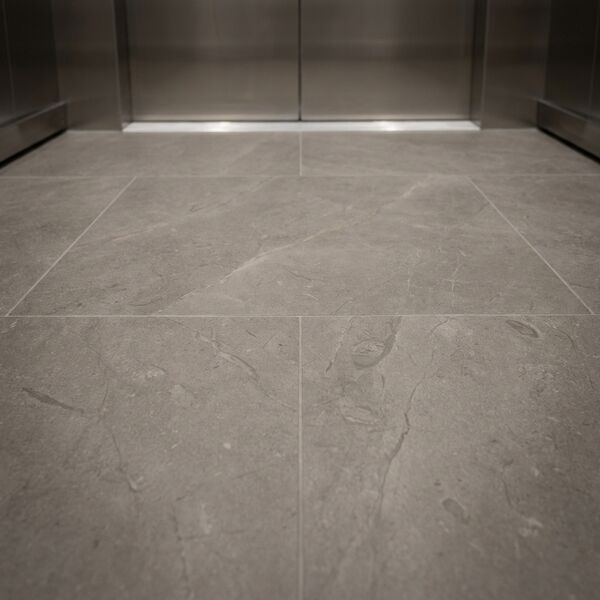
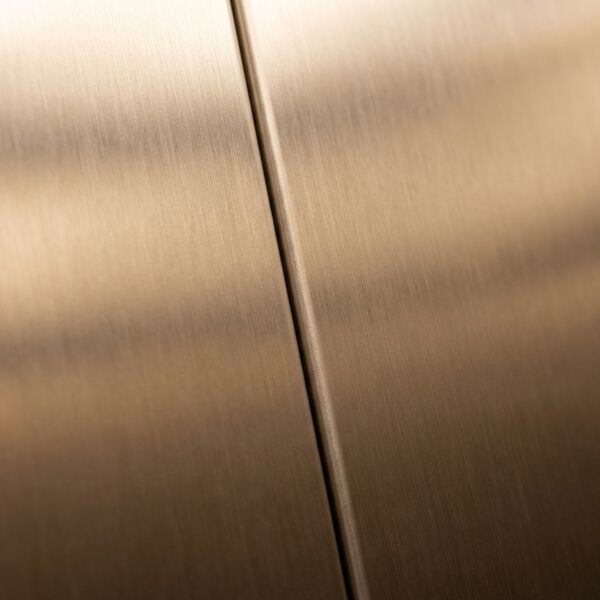
 Boutique Bronze
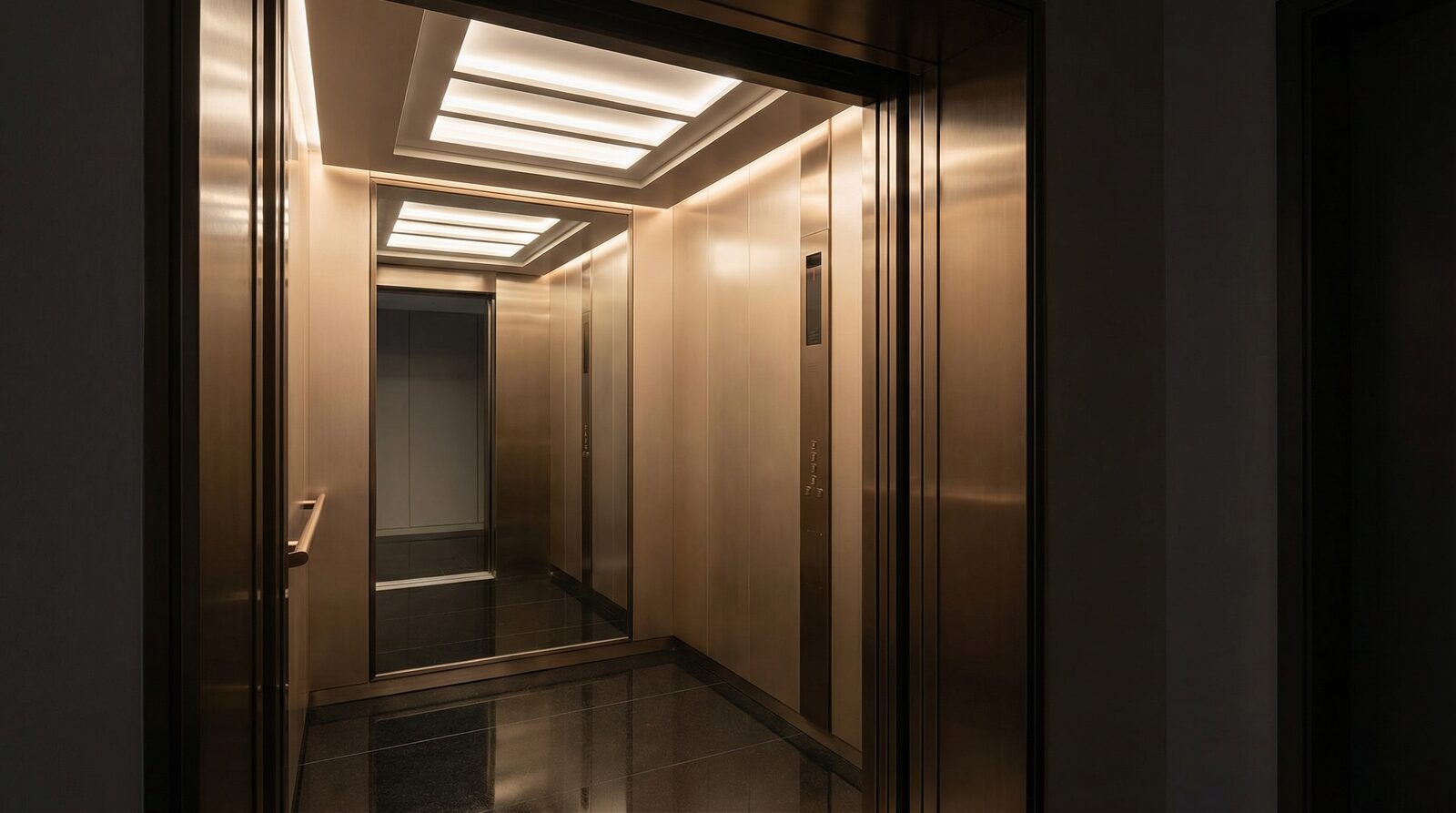
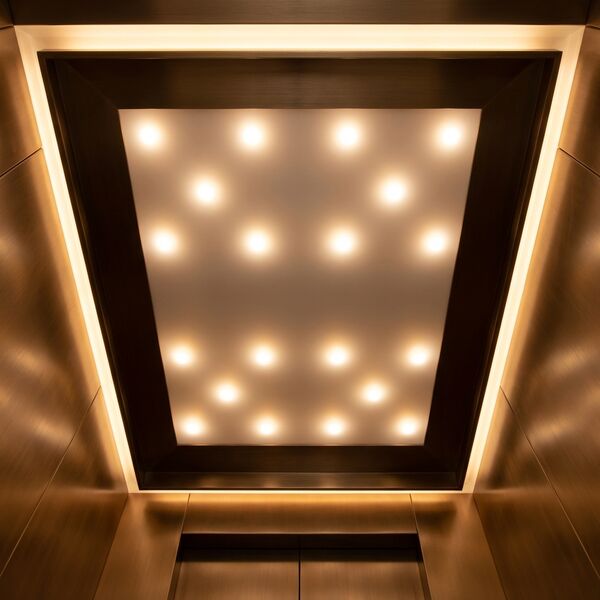
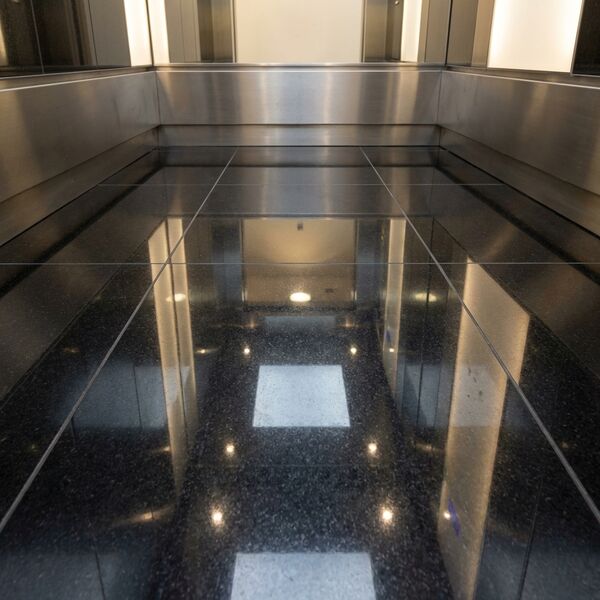
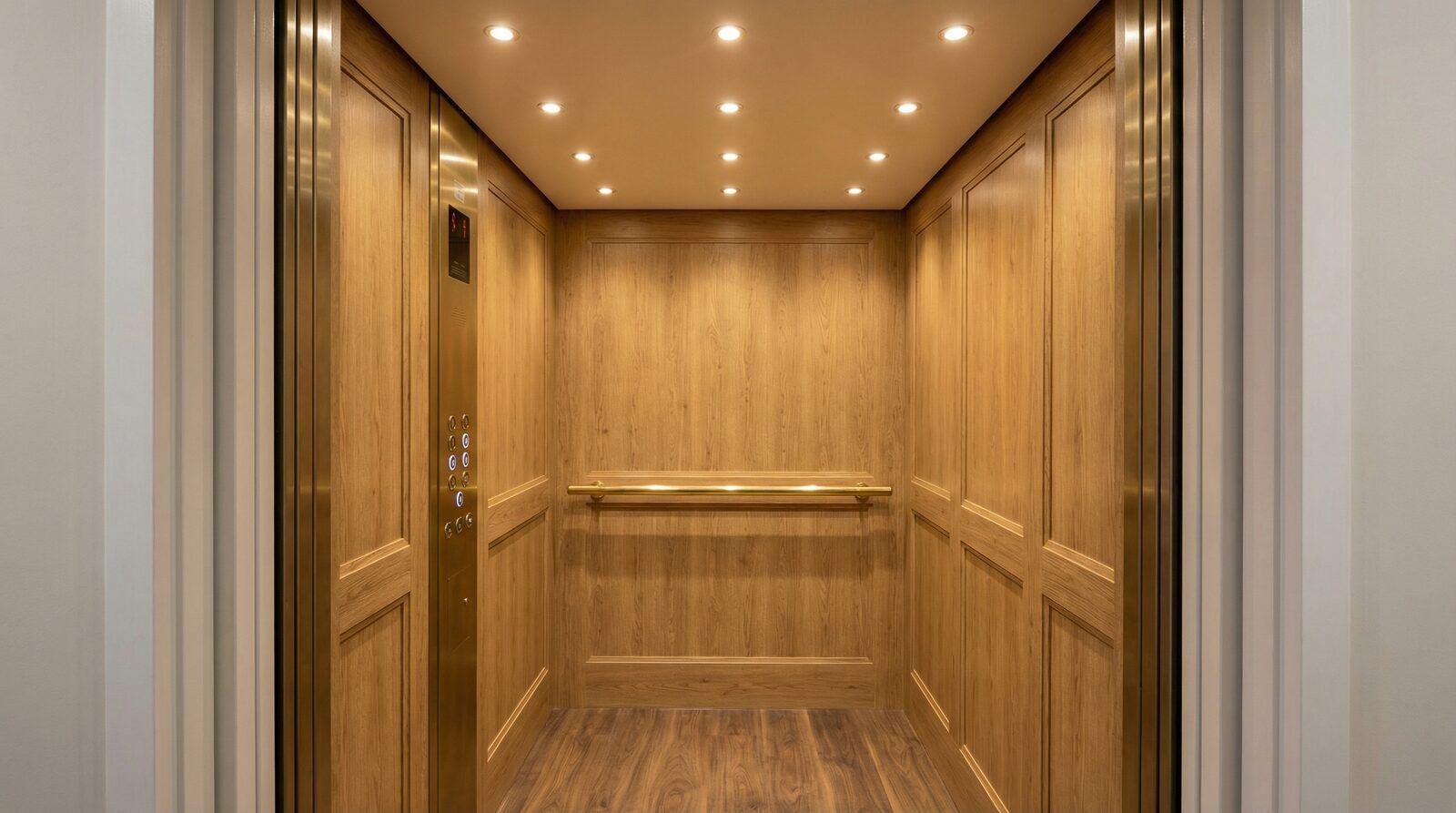
 Warm bronze finishes for hotels, boutique residential and listed-building refurbs. Walnut accents, mirror back, bronze handrail.
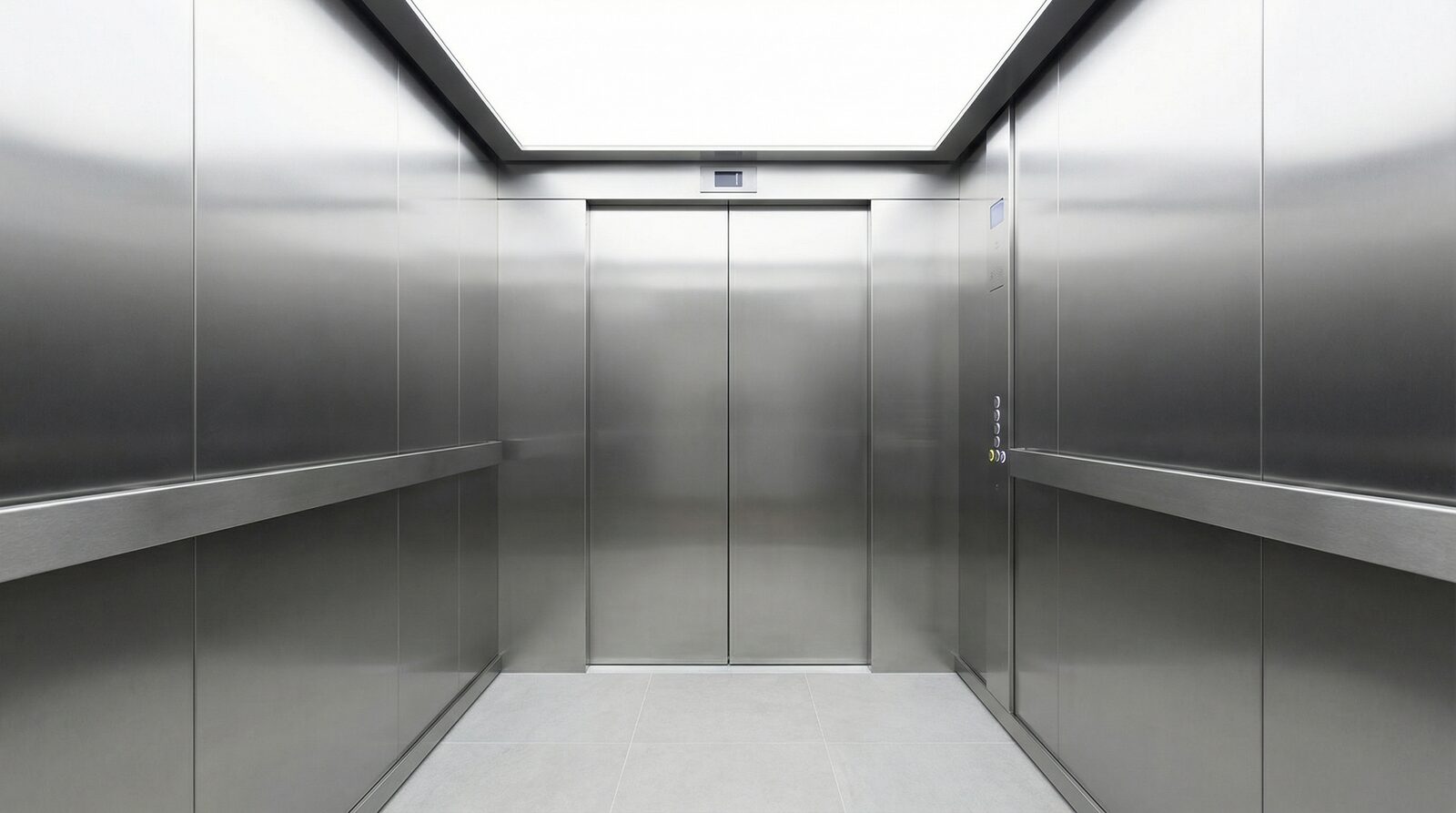 Contemporary
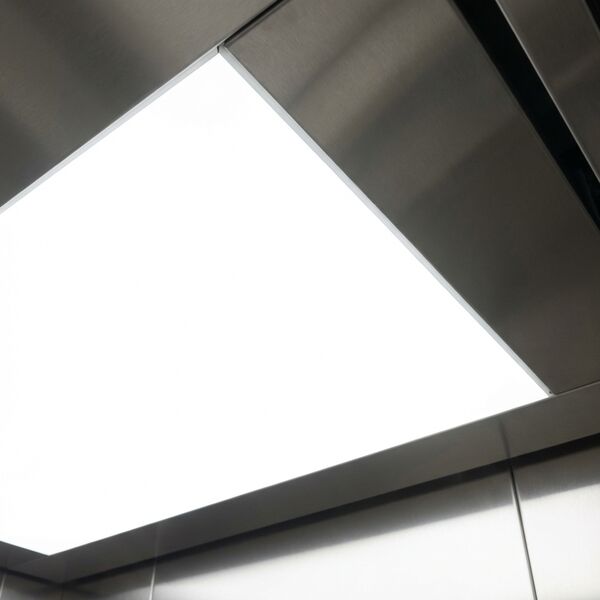
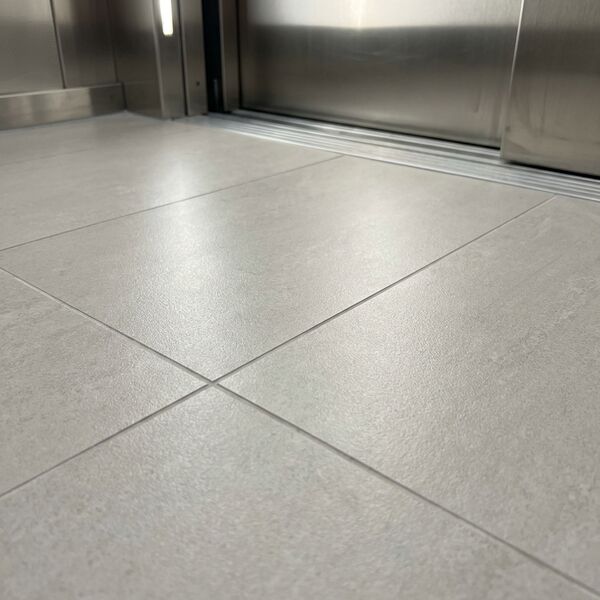
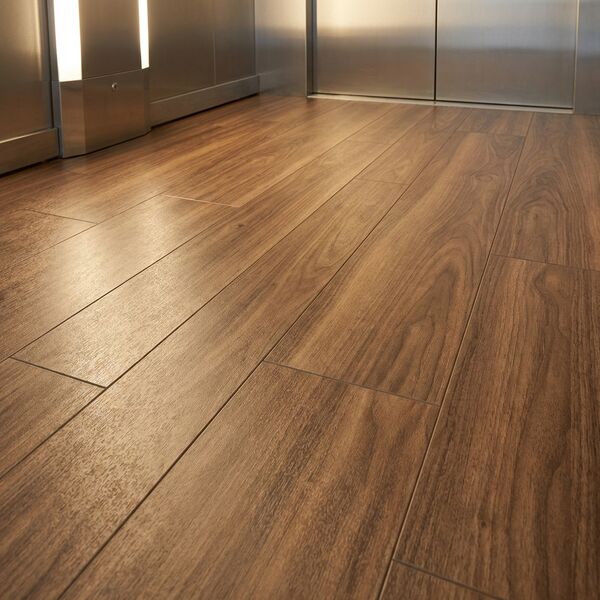
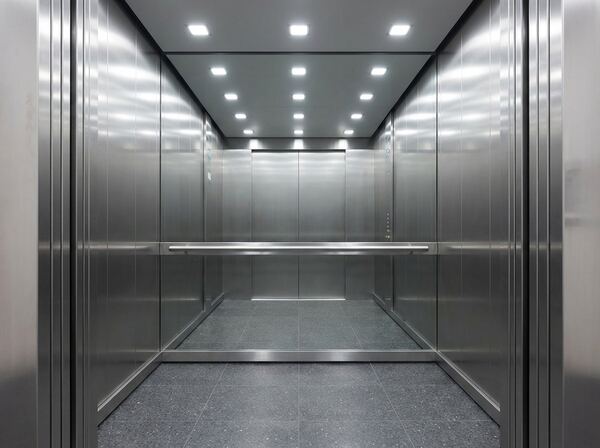
 Crisp brushed stainless for offices, residential blocks and care-home interiors. Vinyl floor, LED panel ceiling, mirrored half-height.
 Warm Heritage
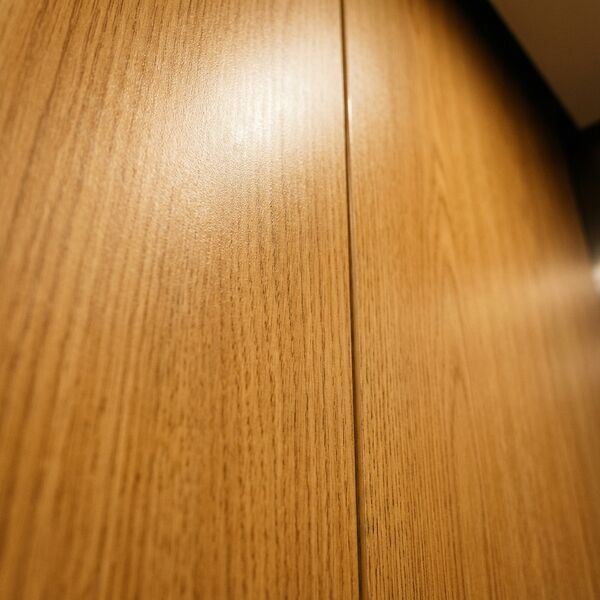
 Oak and timber finishes for Grade II listed buildings, country-house hotels and traditional residential lifts. Brass or bronze fixtures.
Modernise a lift aged 15-25 years where the shaft, car structure and rails are sound — drive, controls, doors, cab and accessibility can all be brought to current BS EN 81-80 standards at 40-60% of replacement cost and 2-6 weeks of downtime. Replace a lift aged 30+ years, or where the shaft is non-compliant or the duty cycle has outgrown the original design — full replacement runs 100% baseline cost and 8-16 weeks contract-to-handover. BASE will recommend replacement instead when modernisation is not cost-effective; we lose more reputation on a botched modernisation than we earn on the sale.
Modernisation suits a lift between 15 and 25 years old where the shaft, car structure, rails and primary mechanicals are sound, but the drive, controls, doors, cab interior or accessibility provision are tired or non-compliant. The compliance frame is BS EN 81-80 — the SNEL Safety Norms for Existing Lifts — which lists the upgrades a competent person can specify against a thorough examination without a full strip-out.
Honesty caveat — We will recommend replacement instead if the rails are bent, the shaft is non-compliant, or the drive type can't physically be upgraded to current efficiency standards. Modernising a lift that should be replaced is the most expensive mistake in this trade.
Replacement is the right answer when the lift is 30+ years old, when the shaft or car structure is non-compliant beyond economic repair, or when the building use has changed and the lift no longer fits the duty cycle. New installation gives you a full BS EN 81-20 or BS EN 81-41 baseline, the latest drive efficiency, a 20-30 year service life and a clean LOLER record from day one.
Honesty caveat — Replacement is rarely an emergency — schedule it on a planned-works window rather than reacting to a breakdown. See our installations page for the survey-to-handover process.
Indicative single-lift, ex-VAT figures from BASE's UK modernisation portfolio. Floor figures reflect like-for-like swaps in straightforward access conditions; ceiling figures reflect listed-building constraints, out-of-hours working, multi-stop lifts or specialist finishes. The feasibility survey produces a fixed quote inside two weeks.
Hydraulic power pack and ram, or hydraulic-to-traction conversion. Includes commissioning and a pre-handover LOLER thorough examination.
Modern PLC or proprietary controller with current safety circuits, remote diagnostics and EN 81 compliance. Includes COP, landing fixtures and signalling.
Door operator, photocell light curtain, landing-door interlocks and restrictors. Per opening — multi-stop lifts scale linearly.
Floor, walls, ceiling, lighting, mirror, handrails, COP. Standalone visible upgrade — typically packaged with controls or drive works.
BS EN 81-70 / Equality Act 2010 evidence pack — tactile buttons, audible announcements, visual indicators, contrasting trim, handrails. Often packaged with cab works.
Comprehensive modernisation — drive, controls, doors, cab, accessibility together. The most cost-effective package when the lift needs more than one of the above.
Safety Norms for Existing Lifts — the framework competent persons specify modernisation upgrades against
Accessibility for passenger lifts — tactile, audible, visual provision
Successor to the Disability Discrimination Act 1995 — reasonable adjustment duty applies to lift access
Building Regulations 2010 Part M — access to and use of buildings, including lifts in non-domestic and dwellings
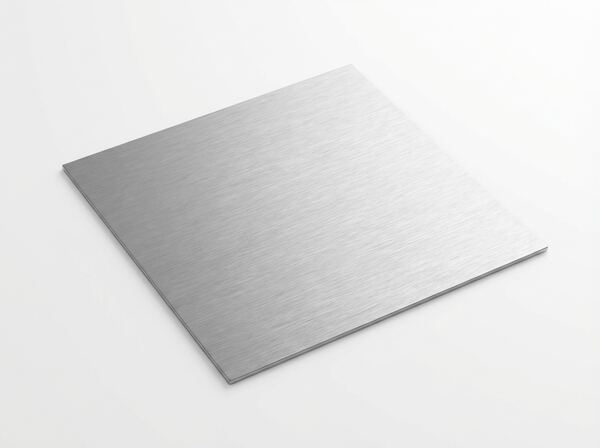
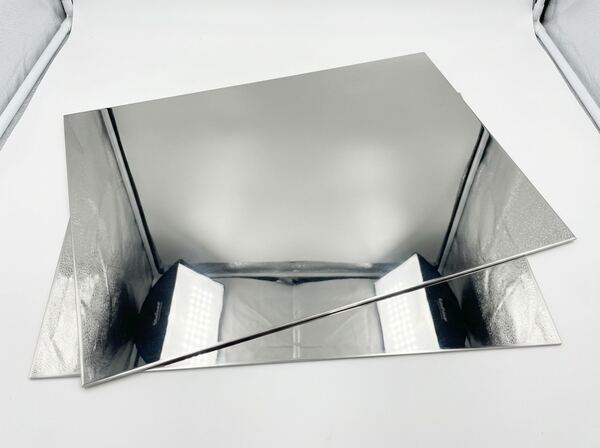
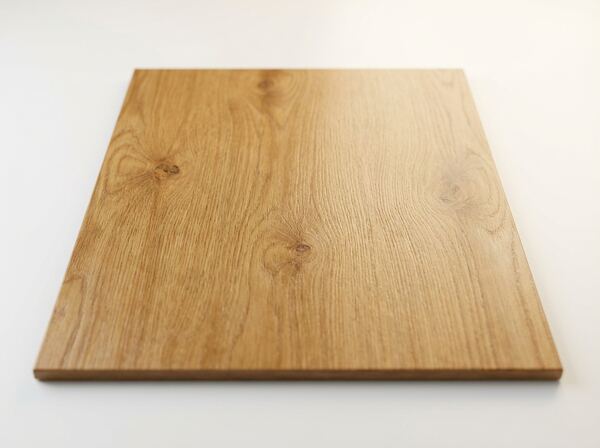
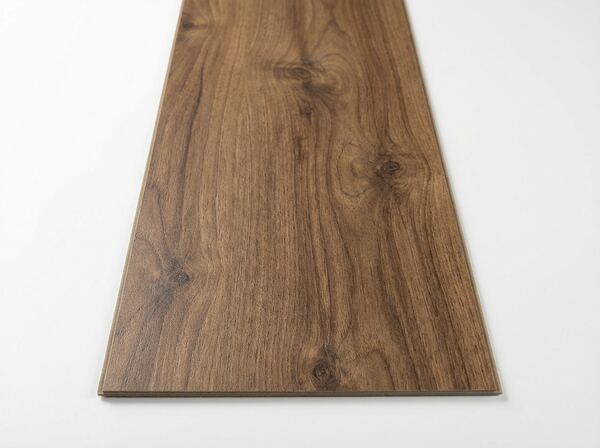
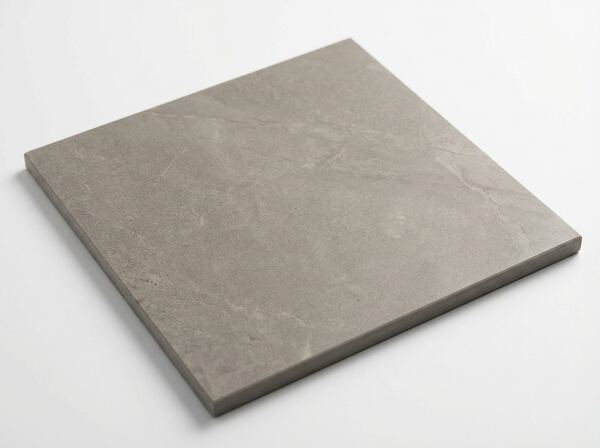
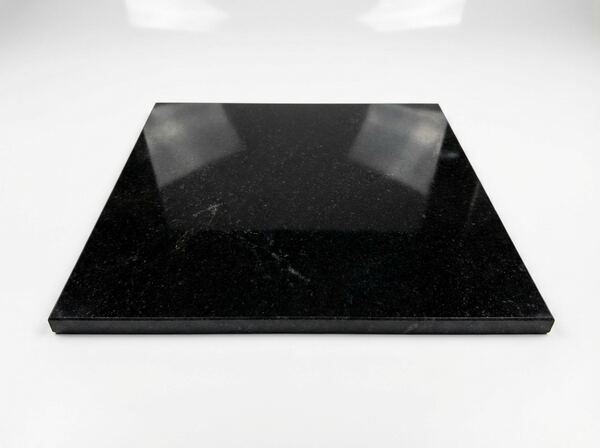
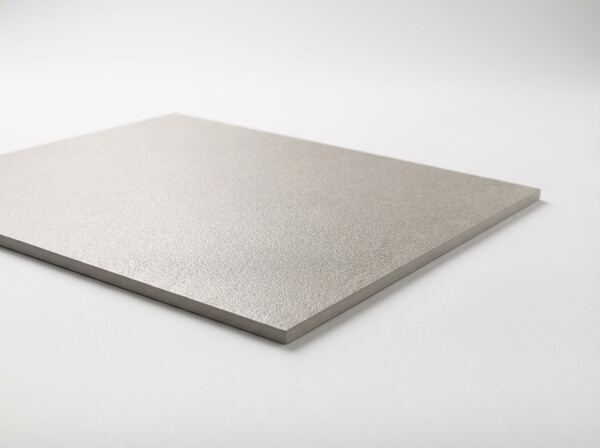
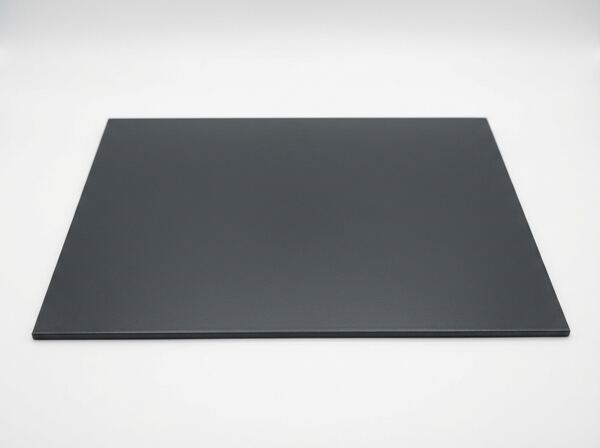
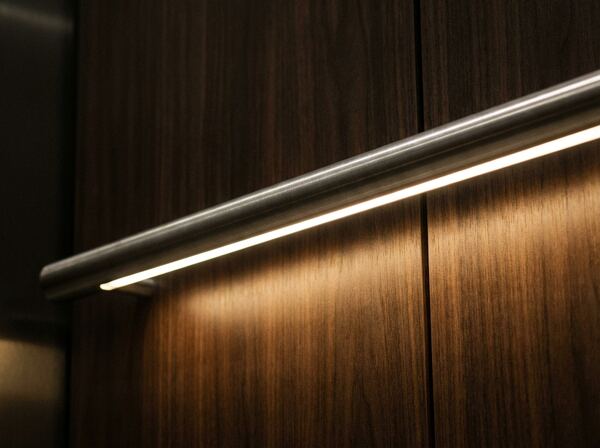
Brushed and mirror stainless, oak veneer, fabric, vinyl, limestone, granite, porcelain, RAL 7016 anthracite, plus stainless handrails, tactile buttons, COP fixtures and LED lighting. Functional inspiration — final selections are made on site against the building's existing materials.
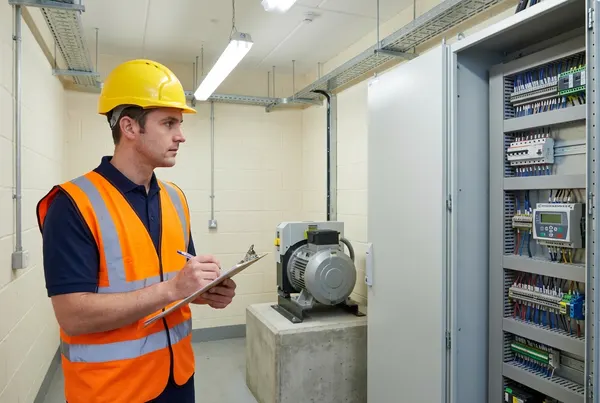
Every BASE modernisation feasibility survey is carried out by an NVQ-qualified lift engineer competent against BS EN 81-80. The same engineer specifies the upgrade, signs off the materials, and is on site during the works. Independence from the OEMs means we specify the component that fits the building — not the component our parent company happens to sell.
A tired residential block lift, a Grade II listed platform lift in need of an accessibility refresh, a 25-year-old commercial passenger lift with failing controls — every modernisation starts with a written survey within two weeks of enquiry. If replacement is the right answer, we will say so, and walk you through that instead.
Or email enquiries@baselifts.co.uk
Boutique Bronze cab finish. Recent modernisation of a boutique hotel passenger lift, drive + controls + cab.